About
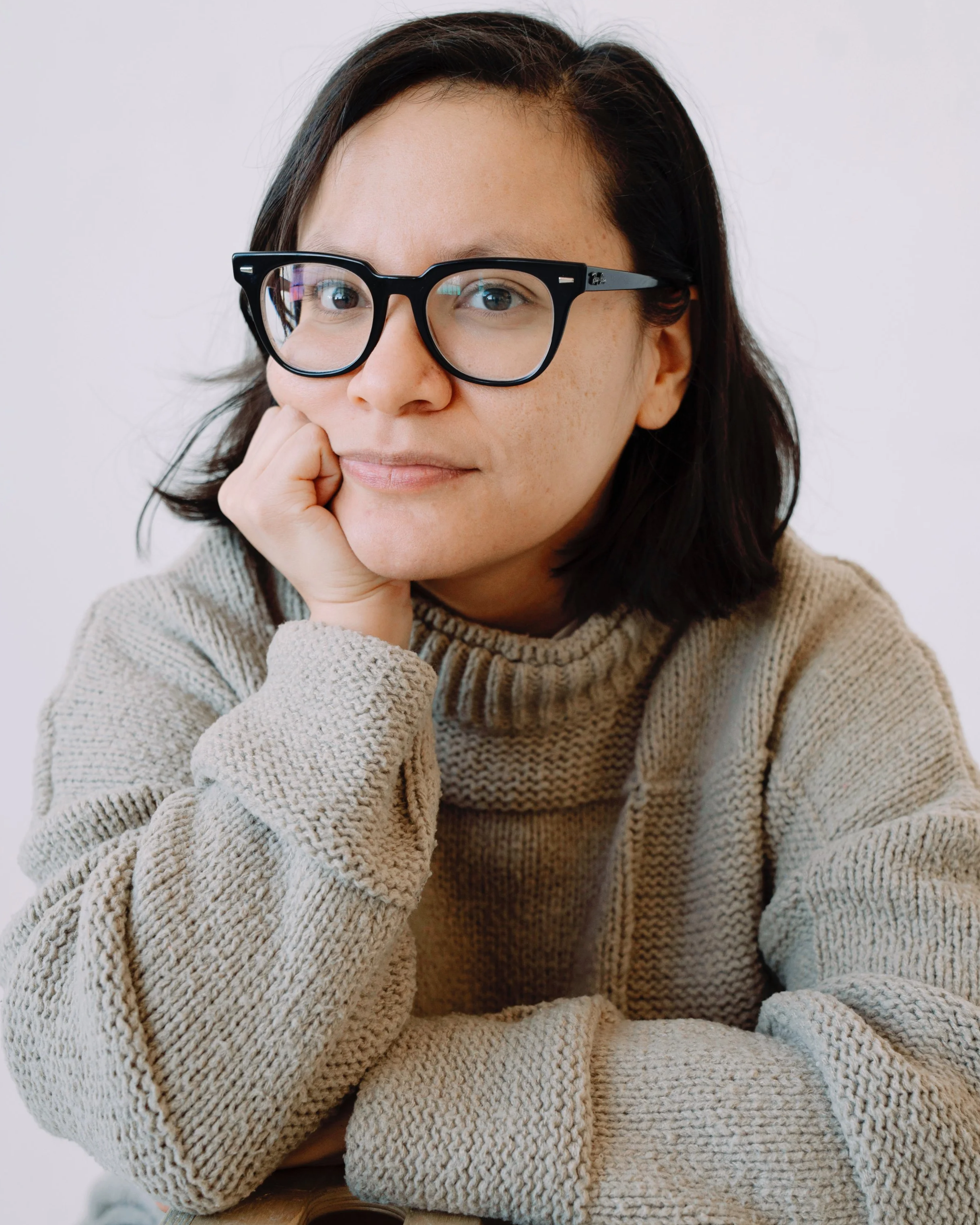
Diana is currently in New York City.
Contact by text or call: (505) 459-1015
Email: dianalcervantes09@gmail.com
Photo by: Rita Vega
Diana Cervantes is an award-winning independent visual journalist and writer based in Brooklyn, New York, and Albuquerque, New Mexico. Her work focuses on conservation, climate change, scientific research, and interspecies relationships, documenting the people working at the frontlines of environmental change and species survival.
Cervantes’ long-form visual practice is rooted in time, proximity, and trust. She embeds deeply with scientists, conservationists, and communities to create nuanced narratives that move between intimate moments and broader ecological contexts, emphasizing both the scientific process and the emotional weight of working in an era of accelerating loss.
She has a particular affinity for insects—especially beetles—and her work often centers on overlooked or fragile species as entry points into larger questions of responsibility, care, and human decision-making.
Comfortable working in physically demanding and remote environments, Cervantes regularly undertakes long field seasons under challenging conditions to fully understand the landscapes and people she photographs.
Her work has been published internationally, including in The New York Times, and selected projects have been acquired by the Library of Congress. Cervantes is available for commissions and collaborations worldwide.
Professional Achievements
2026: Accepted to The New York Times portfolio review.
2025: Images from her project, “Keeper of the Light,” have been acquired and are part of the permanent collection at the Library of Congress.
2023-2025: Selected for Anderson Ranch, The Center program for an advanced three-year mentorship studies with James Estrin of the New York Times and Ed Kashi from VII.
2022: Selected to attend the Eddie Adams Workshop XXXV
2022: Water Desk grantee as part of a reporting team covering climate change in NM, Colorado and Texas with Danielle Prokop and Marisa Demarco for El Paso Matters and Source NM. “CRISIS ON THE RIO GRANDE,” a 14 part series.
2020-2021: IWMF Gwen Ifill Mentorship Fellow mentored by National Geographic Photographer and Nikon Ambassador Ami Vitale.
2020: Recipient of the Associate Grant through The Yunghi Kim Grant, courtesy of Timothy Hyde.
Judges Comment: One of the talents of Diana that comes through in her photographs is making people feel at ease. Her subjects are clearly comfortable with her. “Likable” is an important character trait of any profession but even more so in photojournalism in terms of allowing people you photograph to trust you and allow access. Yunghi Grant is happy to support her this year with a Associates Grant of $1,000, a generous donation from Timothy Hyde. We are excited to watch Diana continued journey as a photojournalist.
2019: Recipient of the Associate Grant through The Yunghi Kim Grant, courtesy of Manuello Paganelli.
2019: Image selected and published for National Geographic’s Your Shot “Photos of the Week” for Aug 2, 2019.
2018: Image selected for National Geographic’s Best of Your Shot 2018. Featured alongside 70 other photographers selected and curated from over 1.2 million images.
2018: Image selected and published on National Geographic Your Shot “The Daily Dozen” for Nov. 20, 2018
2018: Selected to attend Women Photograph in Brooklyn New York
2016-2018: Nominated in multiple Hearst Award categories for student journalism.
Press
2025: Frankie Magazine Australia: “This shutterbug’s photos capture the story of the lady of the pigeons.”
2025: Lesser Known New Mexico Podcast: Episode 6: Living through the McCarthy era—and surviving Trump & Co.
2023: Western Priorities Podcast: Why you should care about the Rio Grande
2023: KUNM: Let’s Talk NM, The Imperiled Rio Grande
2023: Our Land NMPBS: Behind the Source New Mexico Series: ‘Crisis on the Rio Grande
2022: MPB Interview: Animal and people photojournalist Diana Cervantes
2021: Beautiful News South Africa: Meet the women reining in hope for New Mexico’s wild horses
2019: Mere Mortal Online Blog, Women in Photography Series
Speaking Engagements
2024: University of New Mexico, Writing for Science-based stories
2023: Auburn University, Alabama, On Multimedia Journalism
2021: La Cueva High School, Albuquerque, NM, Introduction to Photojournalism
2021: Pencil Bricks, India, Photographers as Problem Solvers
2020: University of New Mexico, Albuquerque, NM, Communications and Journalism
Exhibitions
2022-2023: “Community Heroes,” Photoville & Fort Greene Park Conservancy, (Collaboration of various photographers). Brooklyn, NY.
2020-2021: “Entitlements,” Atlanta Celebrates Photography, special exhibition for the National Center for Civil and Human Rights, (Collaboration with Authority Collective photographers). Atlanta, GA.
2020: “The Pieces We are,” Six Feet Online Gallery, (Collaboration with Authority Collective photographers). Online.
Awards
2o24: Top of the Rockies: 3rd place, General Reporting-Series or Package: Danielle Prokop, Diana Cervantes for “Crisis on the Rio Grande.”
2023: New Mexico Press Association, 1st Place, Best Series, “Crisis on the Rio Grande,” Danielle Prokop and Diana Cervantes for Source NM.
Judges Comments: There have been many stories about the drought and dying rivers of the southwest, but none like this. Here, you have a cast of characters, from the river itself to the people who have seen the changes and are heartbroken by them, to the people trying to save it. If I had started reading this when it was first published, then I would have been looking forward to each new addition to the series. Job well done.
2023: New Mexico Press Association, 1st Place, Environmental or Agricultural Writing, “Crisis on the Rio Grande: Rescuing Silvery Minnows like ‘slapping a Band-Aid on a severed limb,” Danielle Prokop and Diana Cervantes for Source NM.
Judges Comments: This is a heart-wrenching story about a fish species, the endangered silvery minnow, that’s clearly fighting a losing battle for survival. That’s thanks to a wide array of human-caused forces that have gradually devalued the Rio Grande as a place for fish to live. The story’s revealing portrait of Thomas Archdeacon, the federal biologist who has led the minnow recovery project for a decade, is perhaps the story’s most heartbreaking element, given his candor about the minnows plight.