They’re Trying to Find a Mate for This Very Lonely Caterpillar
By Catrin Einhorn Photographs and Video by Diana Cervantes for The NEw York TImes
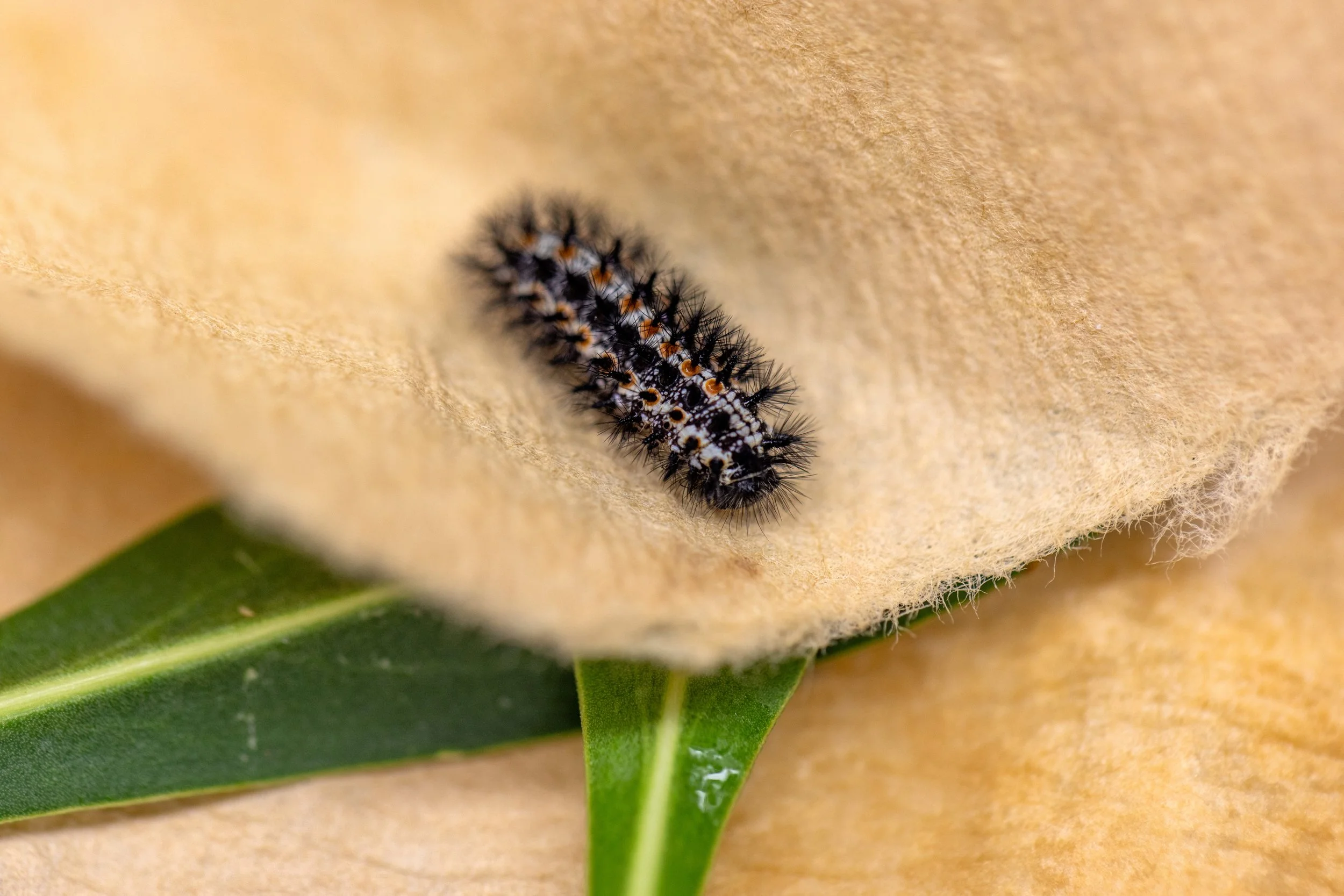
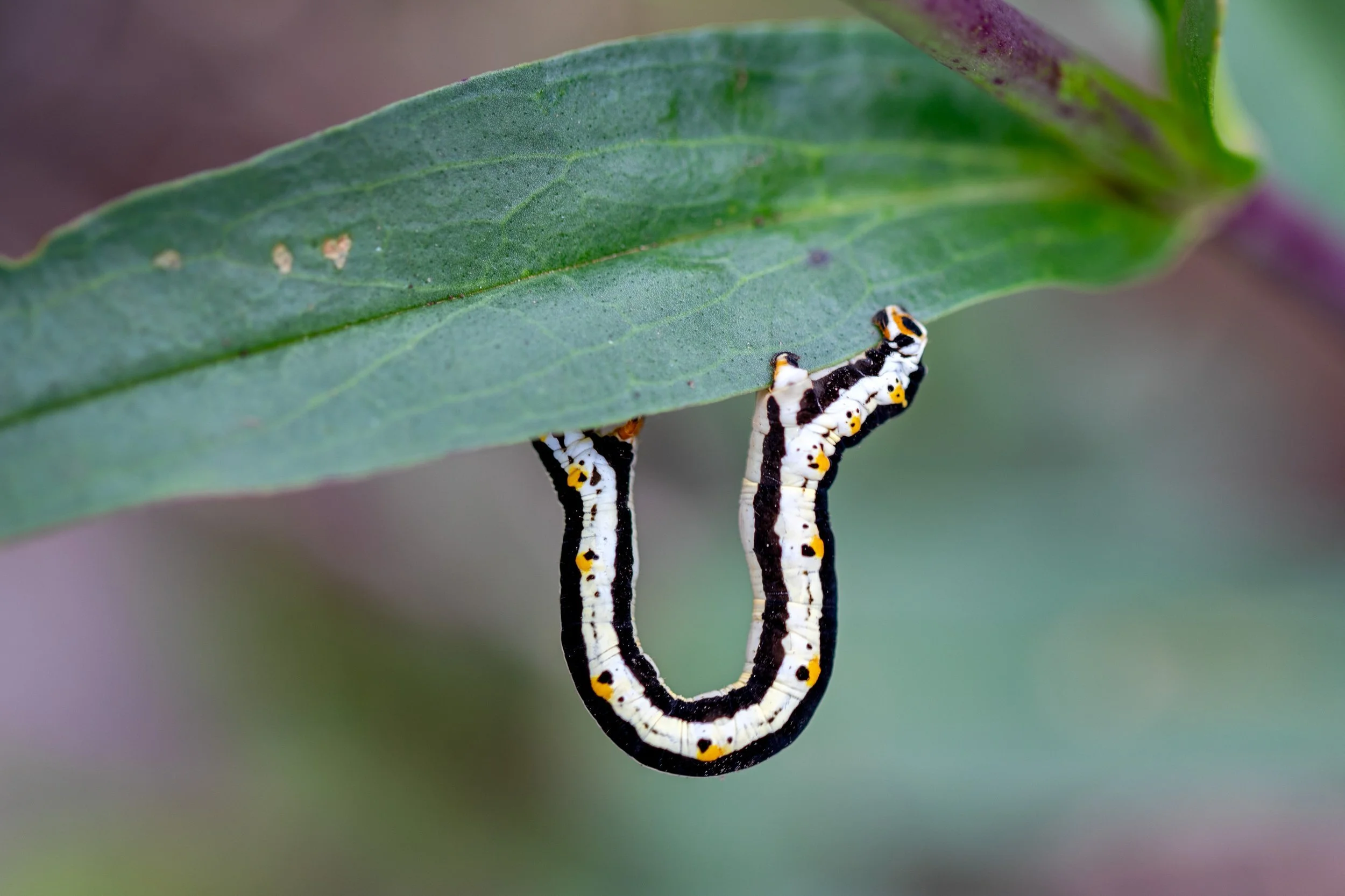
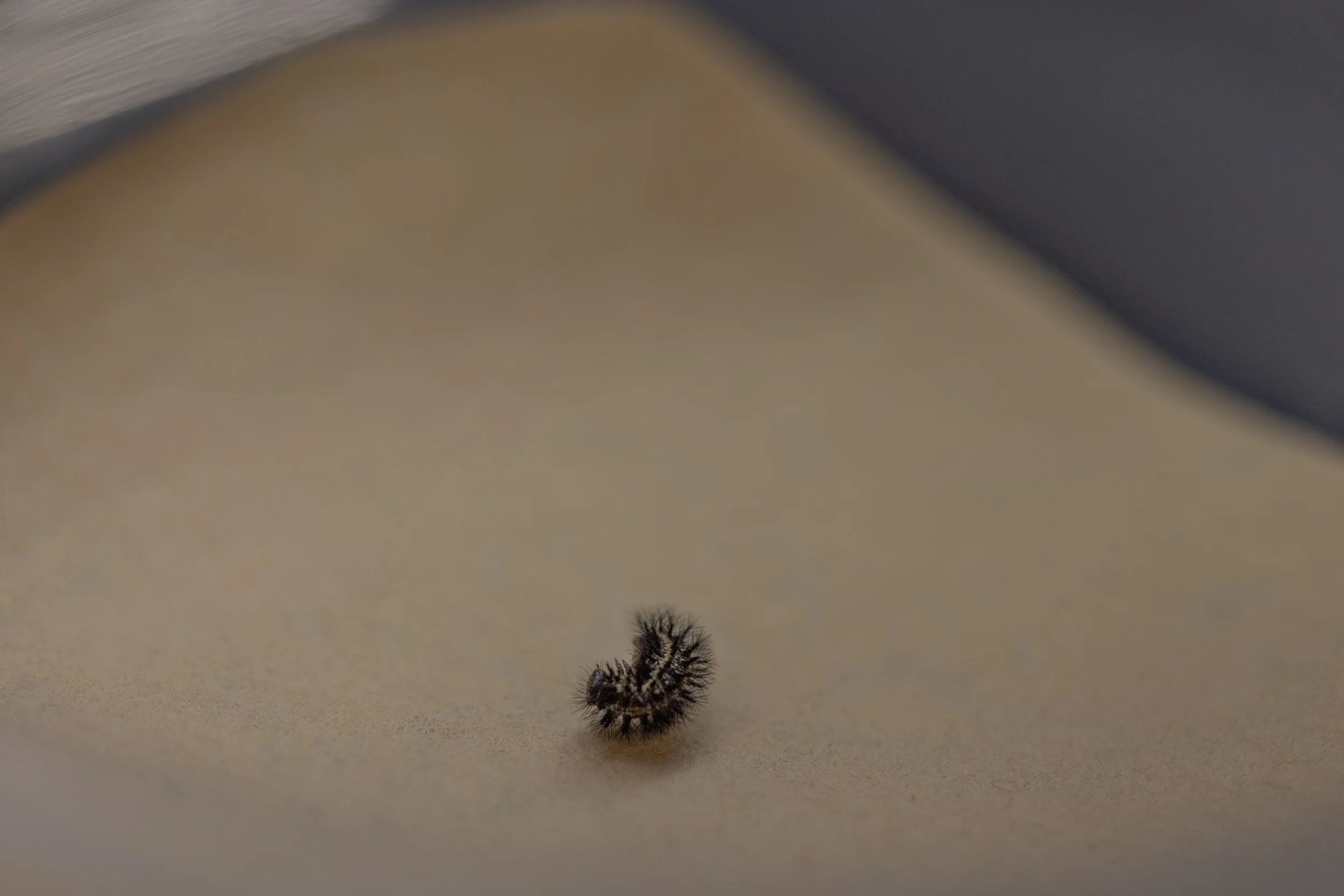
The only known living individual larva of the Sacramento Mountains Checkerspot Butterfly (Euphydryas Anicia Cloudcrofti), in captive rearing at the ABQ BioPark on July 1, 2025. The larva was born in captivity in 2022. The species is listed as an endangered species as of Jan. 31, 2023, by the U.S. Fish and Wildlife Service, and is known to exist in only three meadows in the village of Cloudcroft in Southern New Mexico.* *(source) https://www.fws.gov/species-publication-action/endangered-and-threatened-wildlife-and-plants-endangered-species-62
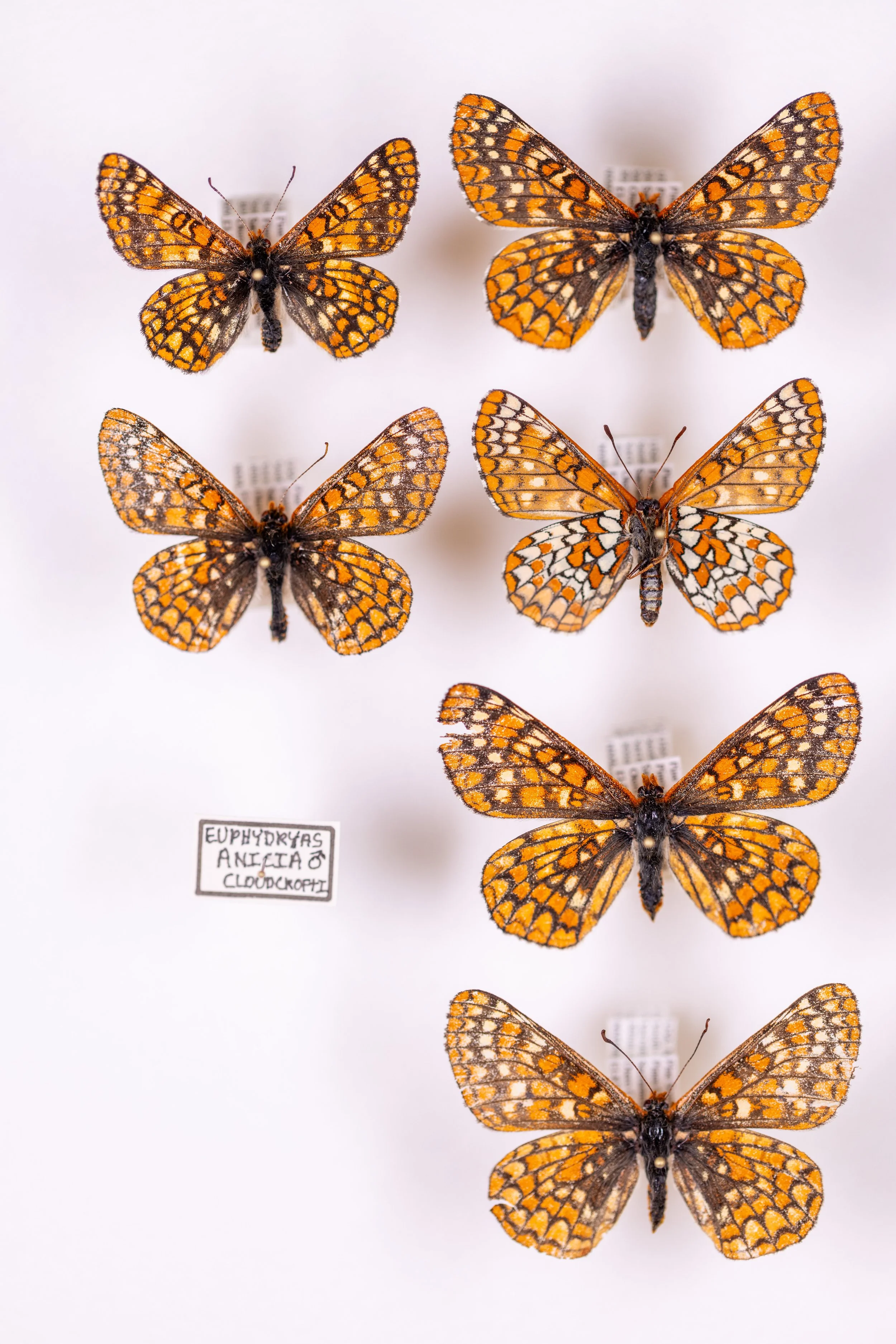
Sacramento Mountains checkerspot butterfly specimens are housed at the collections office of the New Mexico Museum of Natural History and Science as of July 18, 2025. Ernest “Ernie” Giest, a butterfly collector (TC), collected the specimens in Cloudcroft in 2017. Giest donated 11 specimens to the museum’s collection.(Editor’s note: TC = to confirm/check.)
Baine combs through the base of penstemon leaves for any possible Sacramento Mountains Checkerspot Butterfly eggs at Pines Campground on July 09, 2025. The Sacramento Mountains Checkerspot Butterfly lays their eggs in clusters on the underside of penstemon.
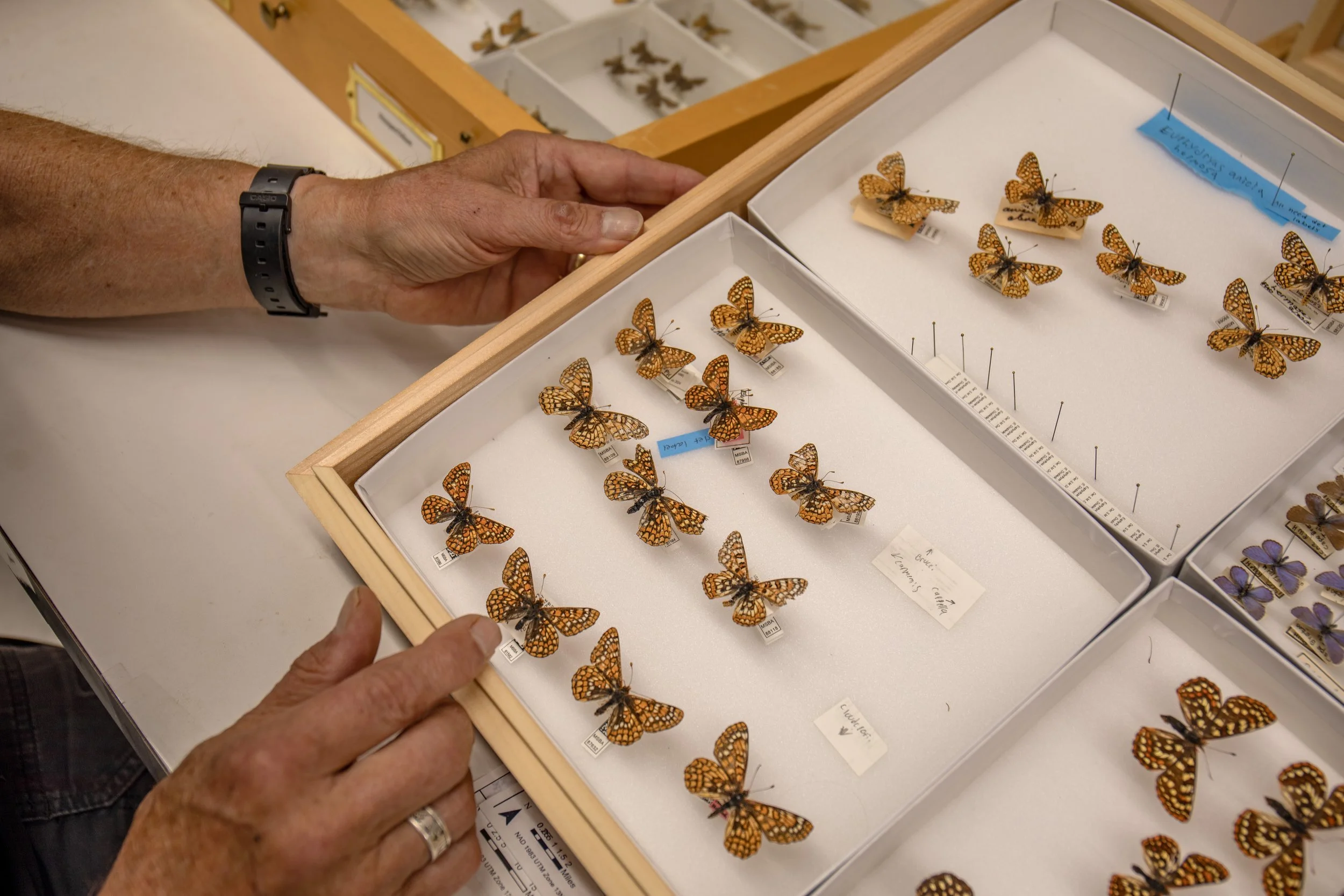
Dr. David Lightfoot examines Sacramento Mountains checkerspot butterfly specimens at the Department of Biology’s Museum of Southwestern Biology, where he serves as research assistant professor and senior collection manager of the Arthropod Museum. He collected butterfly specimens during fieldwork in 2011. Throughout his career, Dr. Lightfoot has worked with several graduate students researching the Sacramento Mountains Checkerspot Butterfly.
Baine presses a plant voucher collected at Bailey Canyon on July 08, 2025, between newspapers to preserve and take back to the lab (TC). (Editor’s note: TC = to confirm/check.)
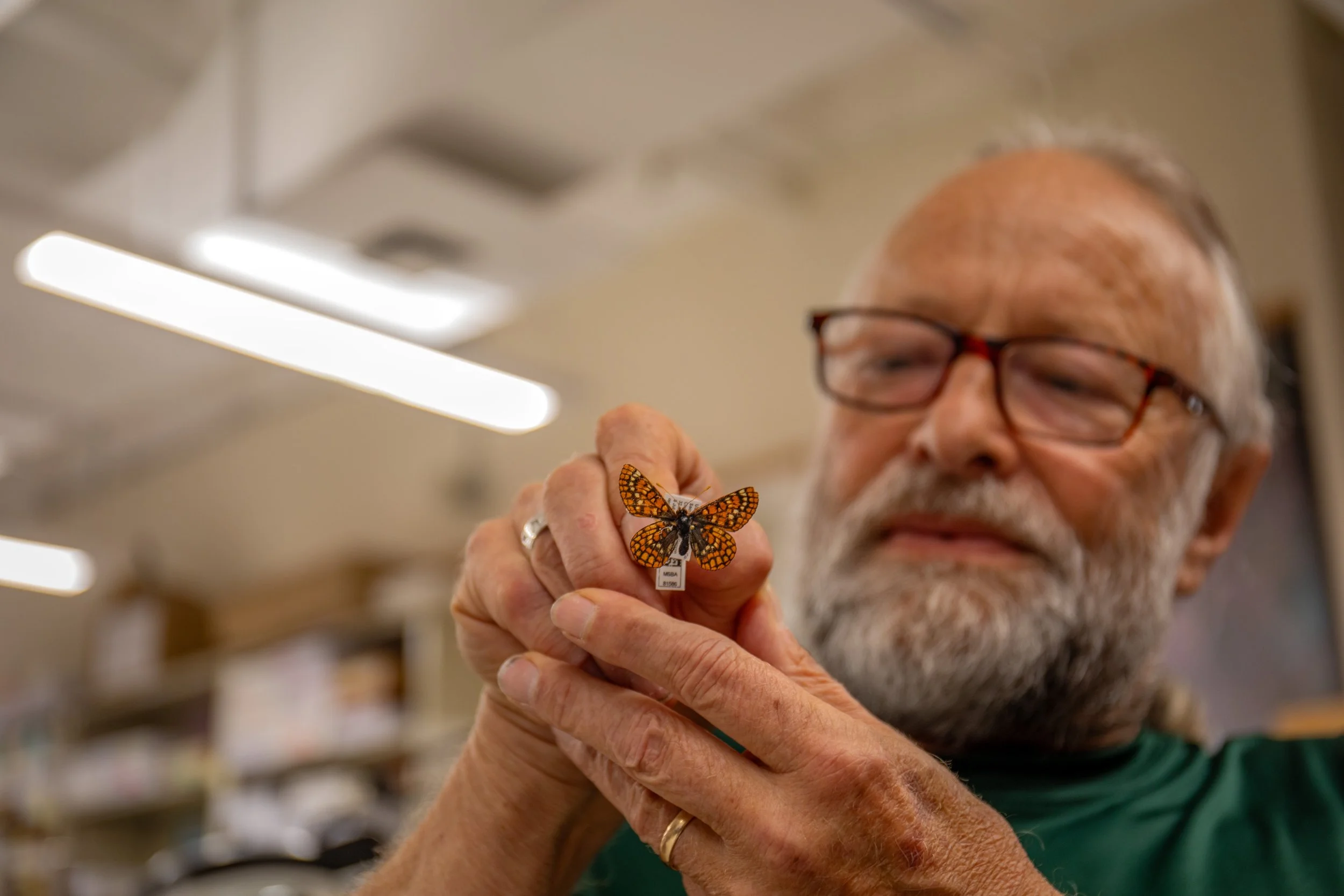
Dr. David Lightfoot holds a Sacramento Mountains checkerspot butterfly specimen at the University of New Mexico’s Museum of Southwestern Biology, where he is a research assistant professor and senior collection manager of the Arthropod Museum. He collected the butterfly during fieldwork in 2011. Throughout his career, Dr. Lightfoot has worked with graduate students researching the Sacramento Mountains Checkerspot Butterfly.
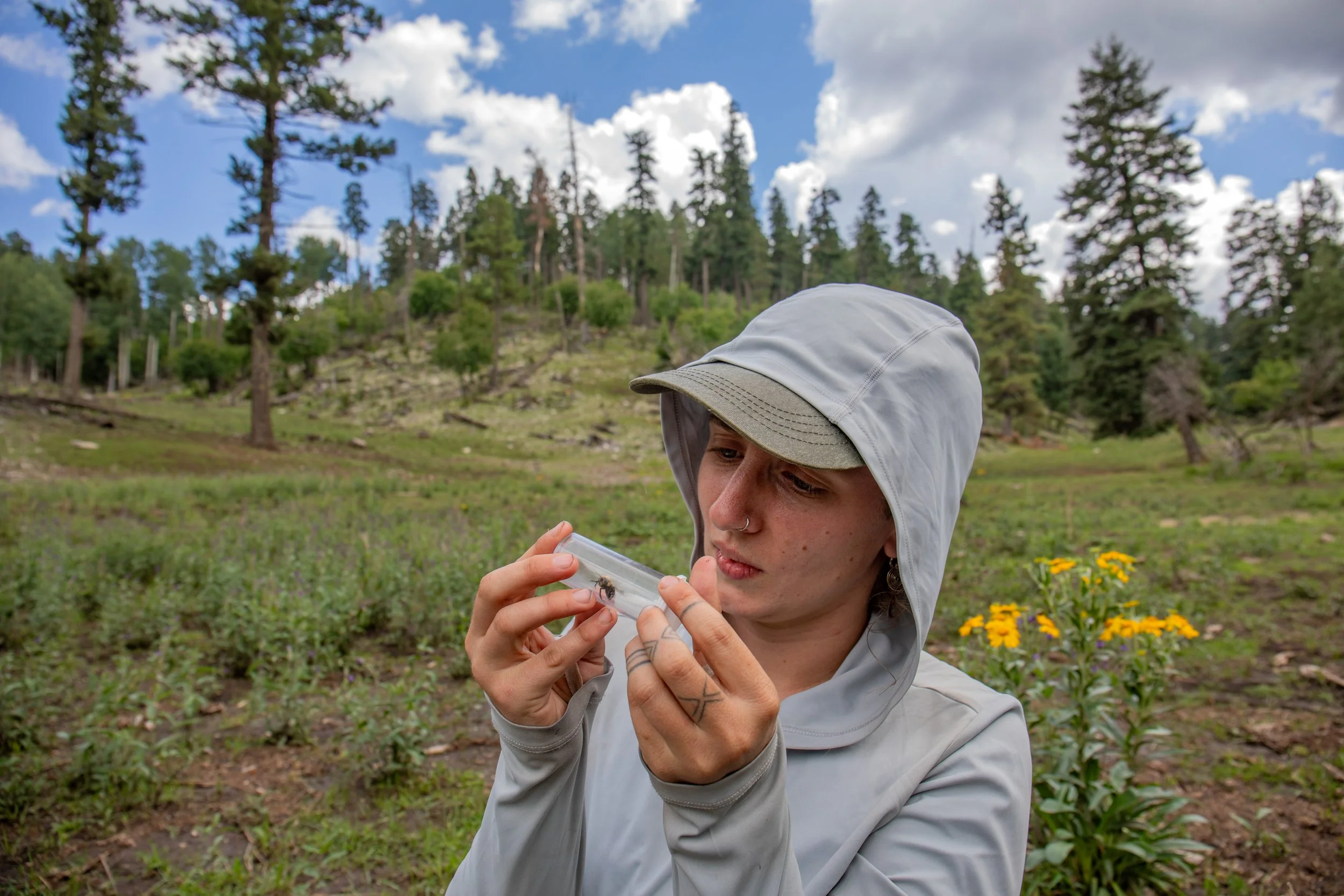
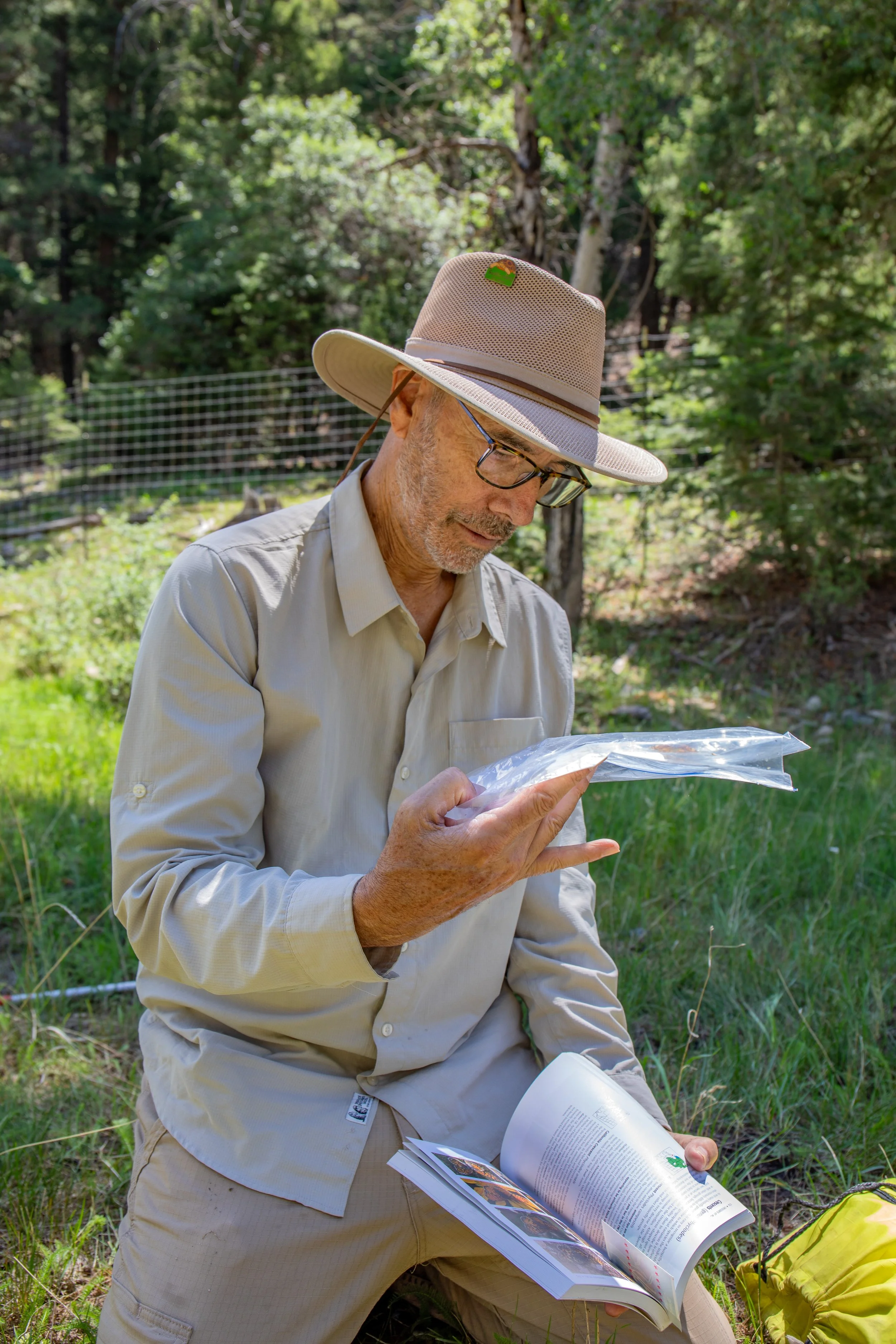
Baine is trying to determine whether the insect caught in a vial at Sleepy Grass Campground on July 9, 2025, is a bumblebee or a bee fly mimic. The team was concerned by the lack of bumblebee species, as none were observed in the Lincoln National Forest during butterfly surveys. Given the area’s abundant nectar, the absence of bumblebees raises concerns.
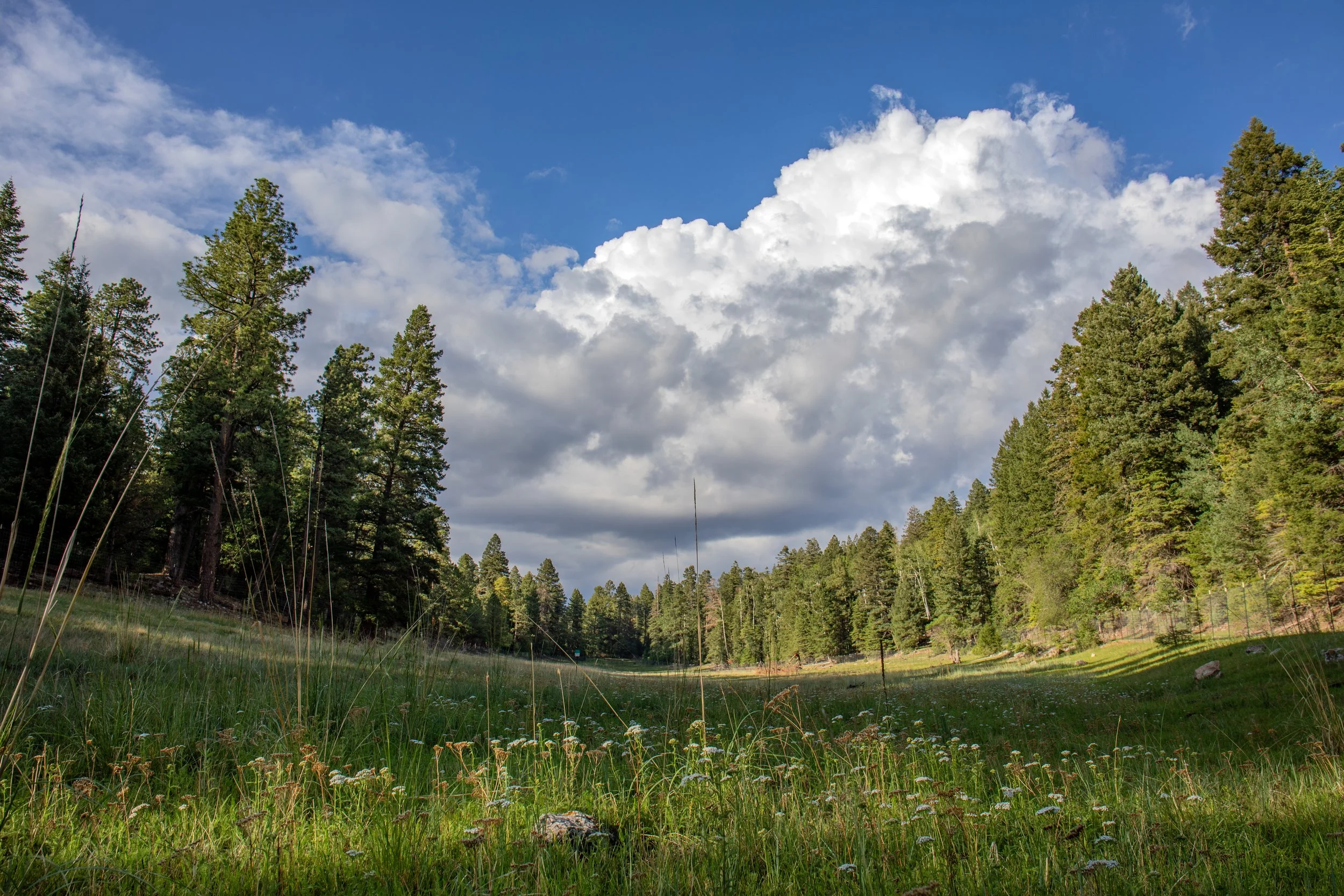
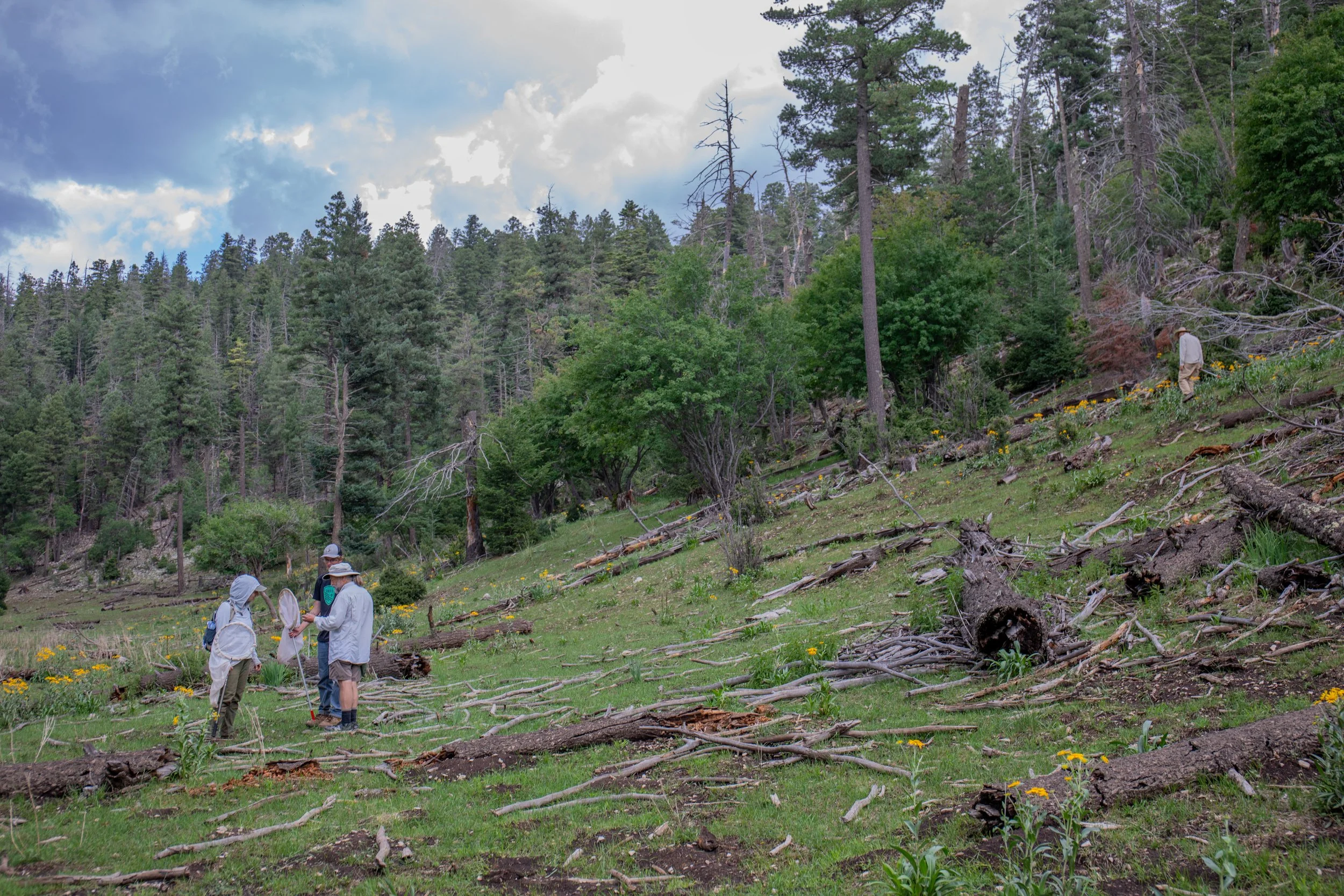
Bailey Canyon meadow, the evening of July 7, 2025. Bailey Canyon is one of three meadows the Sacramento Mountains Checkerspot is known to inhabit in Cloudcroft, New Mexico. The meadow is currently fenced to protect the butterfly habitat and keep out feral grazing horses that trample and feed off of the penstemon. Many theories have emerged as to why the butterflies reside in such a limited range. One particular theory is the use in the 1980s of a petroleum-based pesticide that targeted lepidopterans within a 3-5 km radius of the Village of Cloudcroft.**(source: https://explorer.natureserve.org/Taxon/ELEMENT_GLOBAL.2.115839/Euphydryas_anicia_cloudcrofti)(Editor’s note: TC = to confirm/check.)
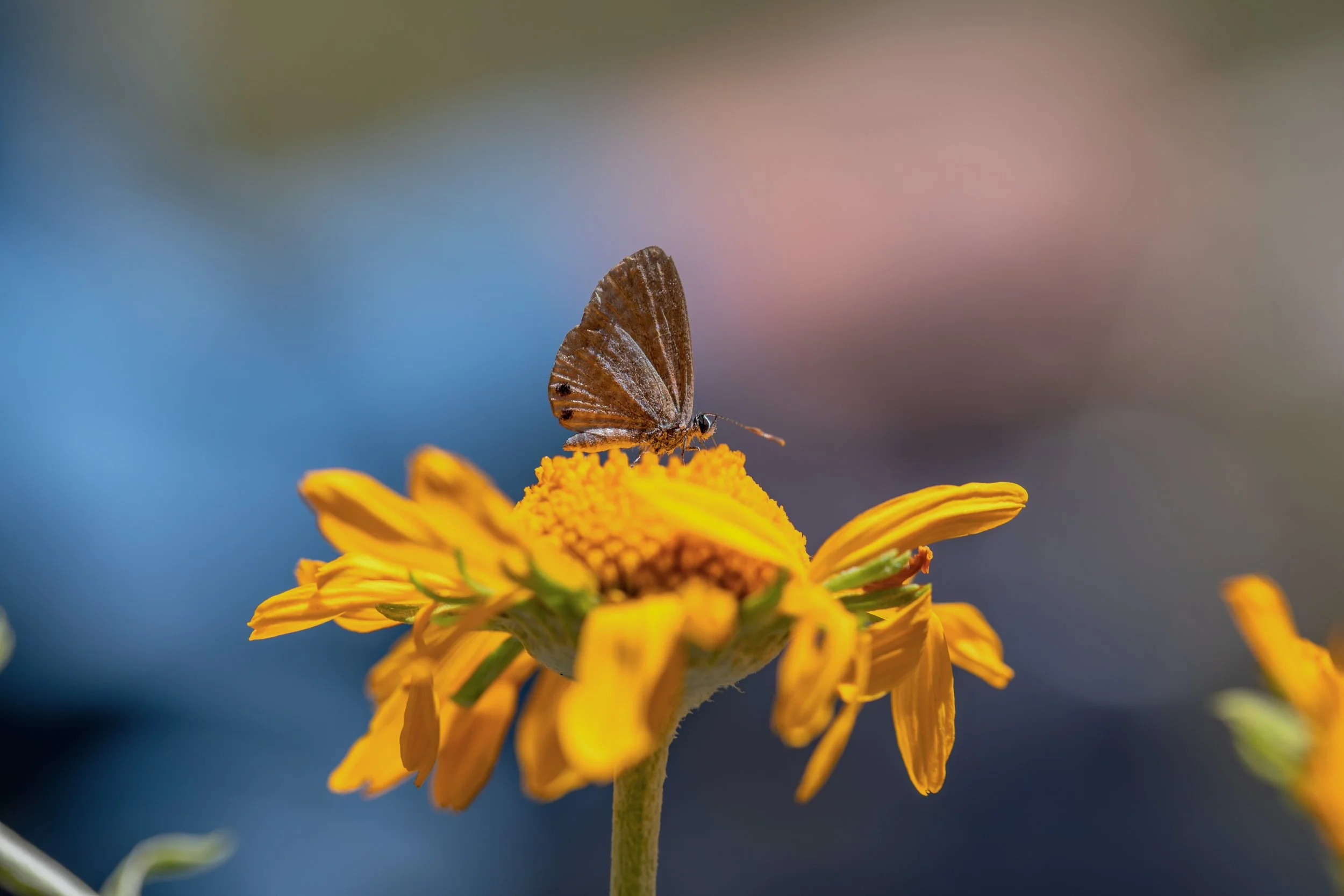
Archive Image: A pygmy blue butterfly rests atop sneezeweed flower on July 2, 2024.
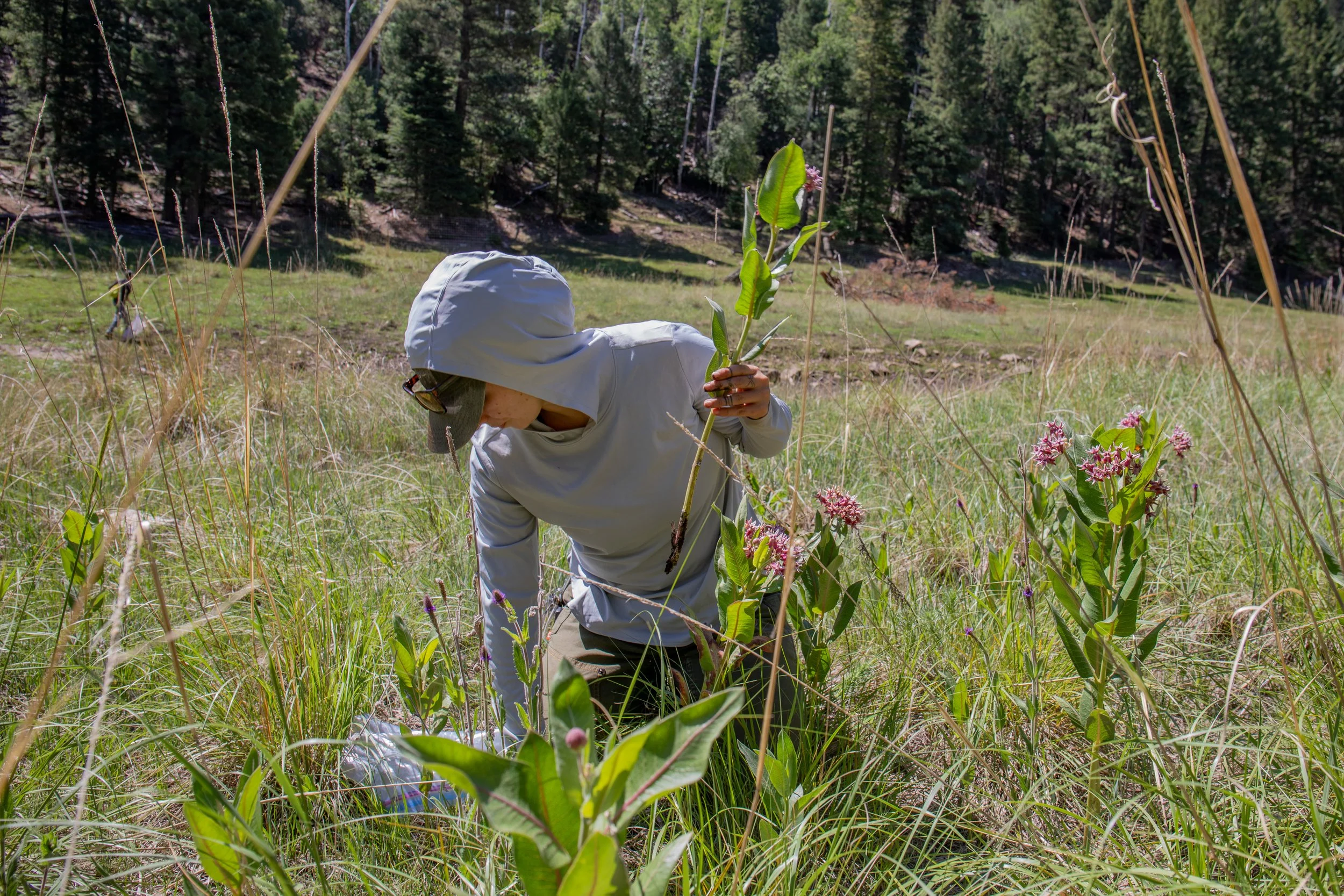
Baine, cuts a milkweed plant voucher to take back to the lab (TC) on the morning of July 8, 2025 at Bailey Canyon.(Editor’s note: TC = to confirm/check.)
Baine presses a milkweed plant voucher collected at Bailey Canyon on July 08, 2025, between newspapers to preserve and take to the lab (TC). (Editor’s note: TC = to confirm/check.)
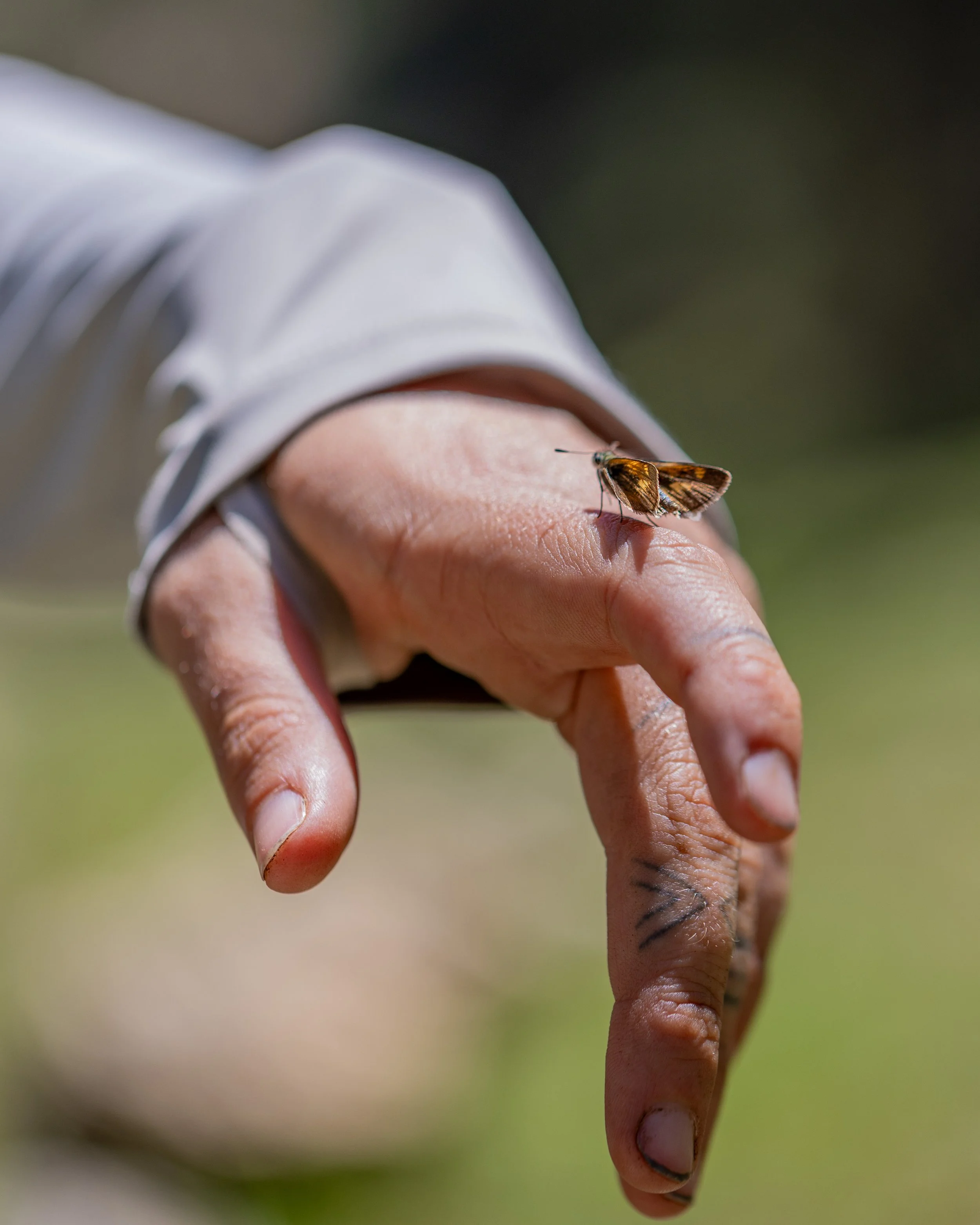
A skipper butterfly rests on Entomologist Quin Baine’s hand while she conducts butterfly surveys in search of the endangered butterfly, the Sacramento Mountains Checkerspot Butterfly, at Bailey Canyon meadow on July 8, 2025.
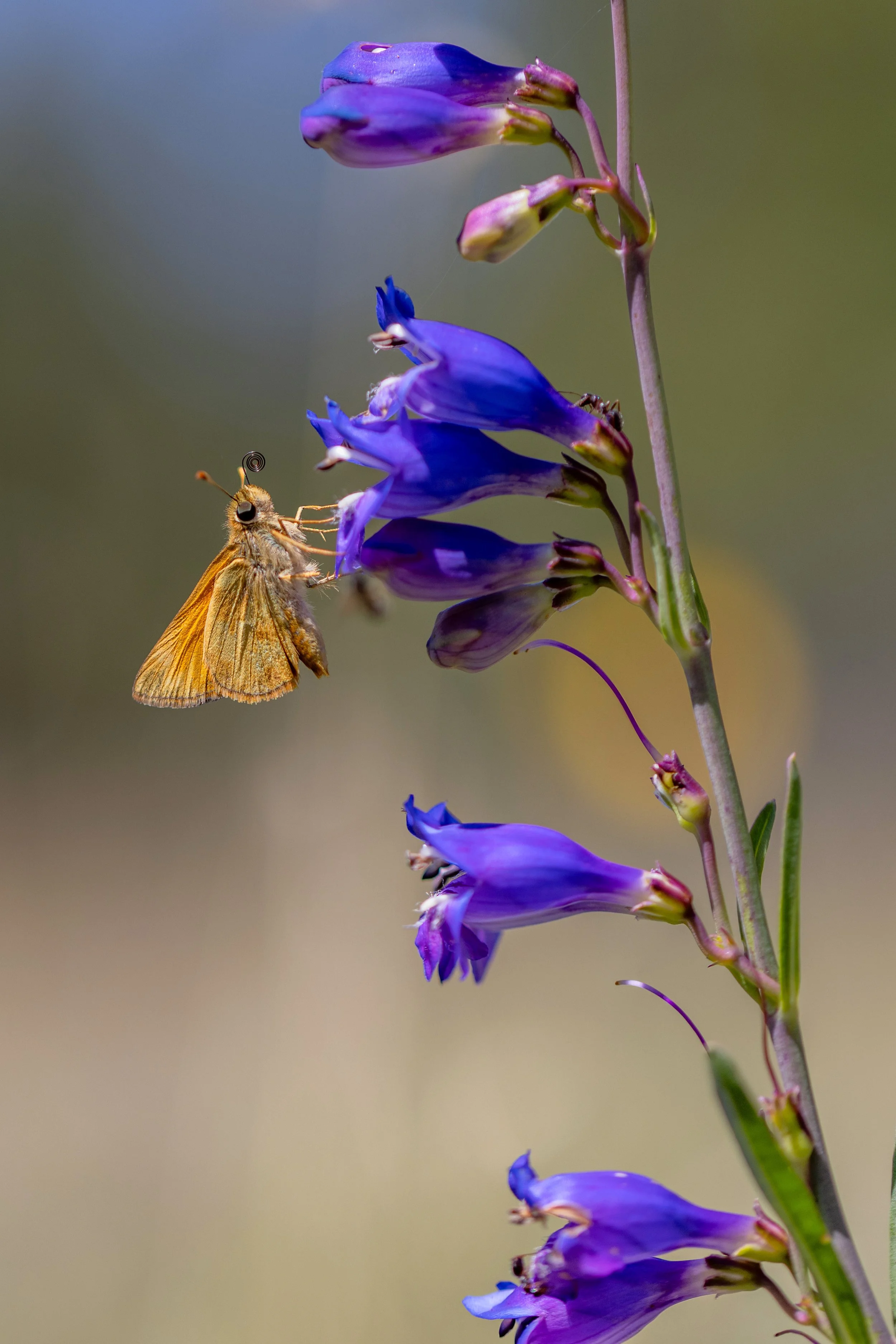
A skipper butterfly feeds off the nectar of New Mexico Beardtongue or Penstemon Neomexicanus, at Bailey Canyon meadow on July 8, 2025. Although the Sacramento Mountains Checkerspot Butterfly was not seen during this fieldseason’s survey, many butterflies and insects were observed subsidizing off the penstemon’s nectar needed for survival.
Archival imageMeris alticola feeds on a penstemon leaf on July 4, 2024. Penstemon is vital to Sacramento Mountains Checkerspot Butterfly larvae and provides food for a variety of bees, butterflies and other insects.
Volunteer Maria Trunk writes down the names of butterflies identified during field surveys for the Sacramento Mountains Checkerspot Butterfly at Bailey Canyon on July 08, 2025.
Volunteer Chuck Kooshian, attempts to identify a butterfly that has the theam perplexed during field surveys for the Sacramento Mountains Checkerspot Butterfly at Bailey Canyon on July 08, 2025.
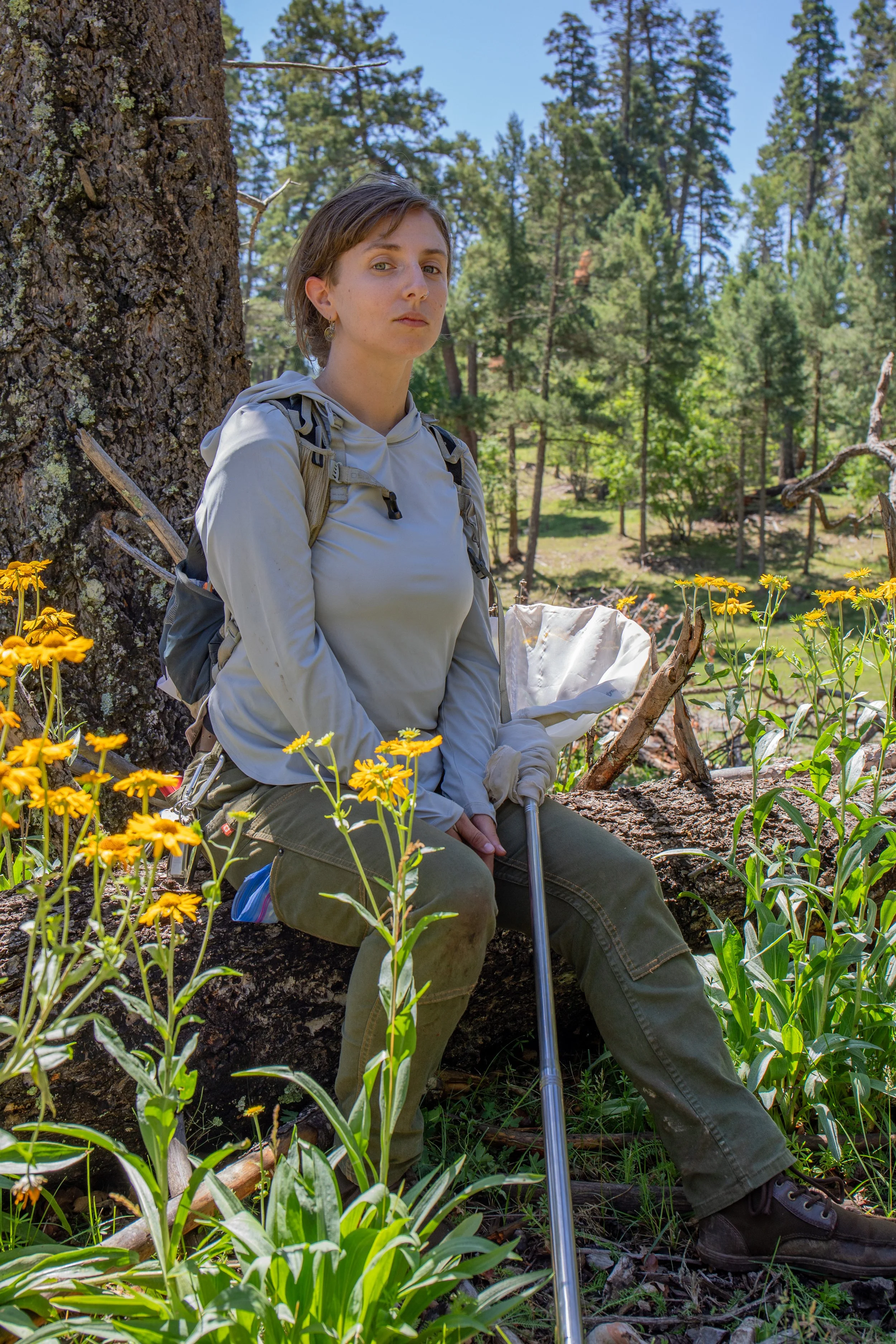
Entomologist Quin Baine and Species Survival Specialist for Invertabrates with the New Mexico Bio Park Society, sits for a portrait among sneezeweed flowers at Pines Canyon on July 09, 2025.
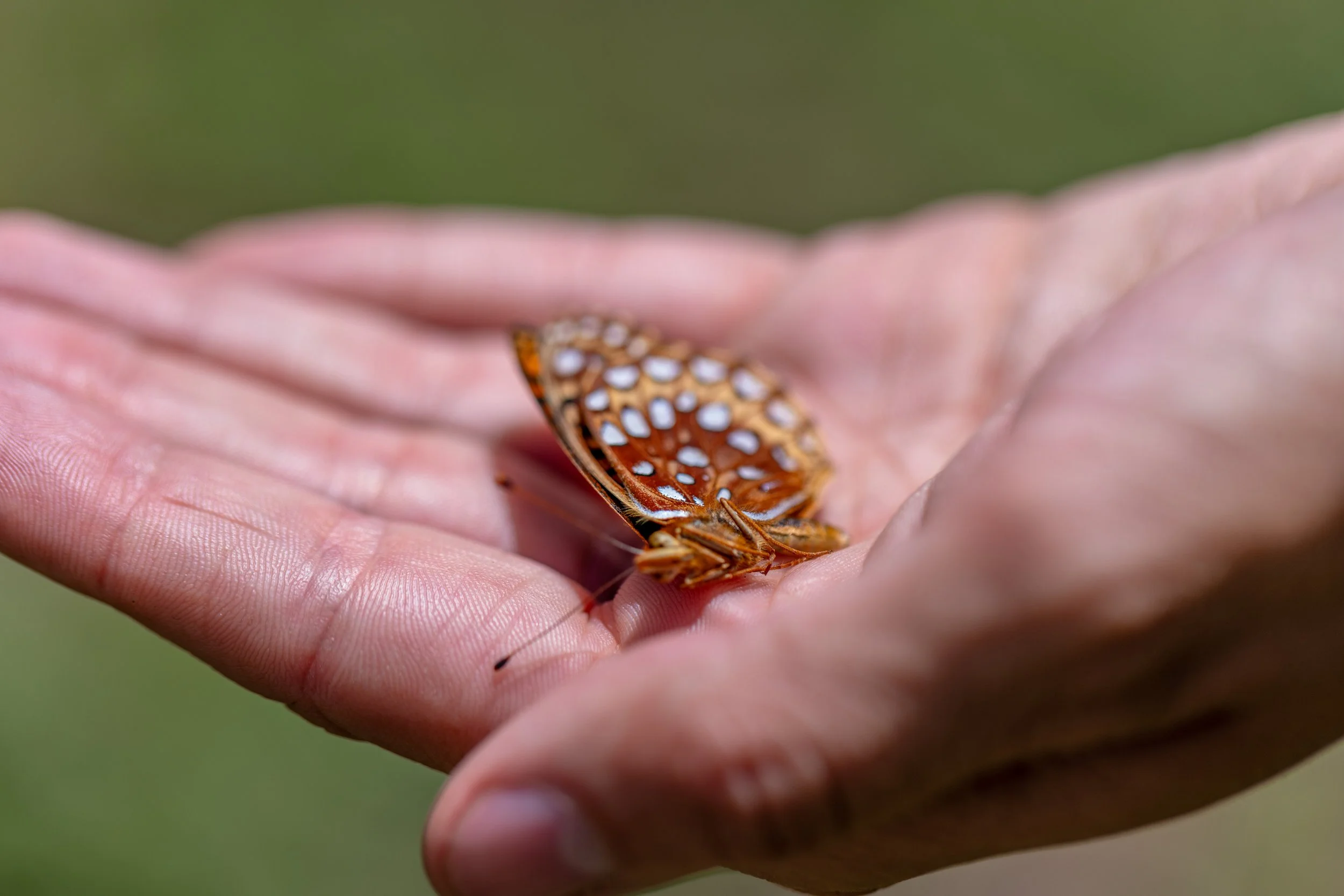
Volunteer (TC he may be a field-tech) Thomas Bulger, a post-bacc student studying lepidoptery at the University of New Mexico, holds a fritillary butterfly (TC) in the palm of his hand during a butterfly survey in search of the Sacramento Mountains Checkerspot Butterfly in Cloudcroft, New Mexico, on July 9, 2025.(Editor’s note: TC = to confirm/check.)
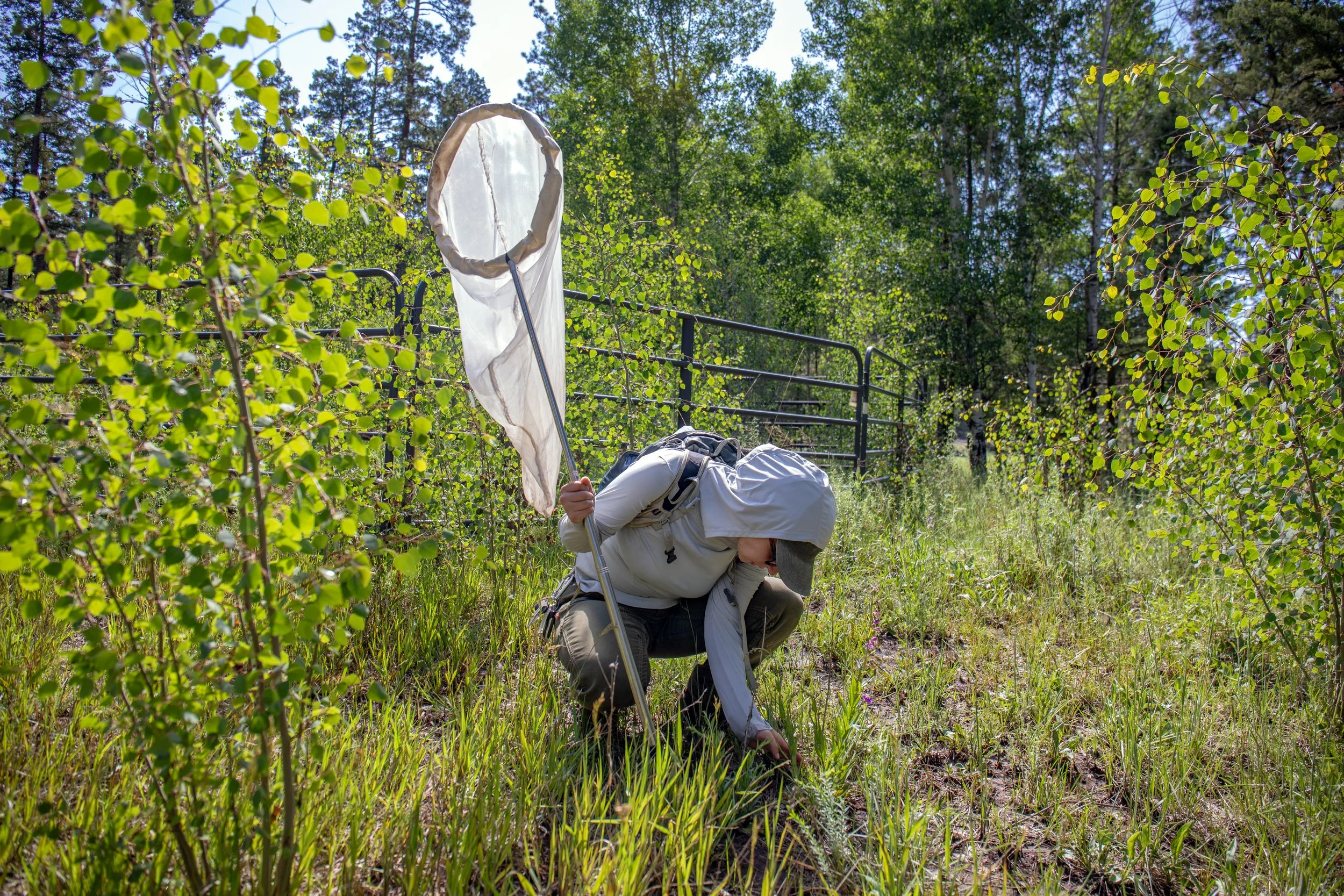
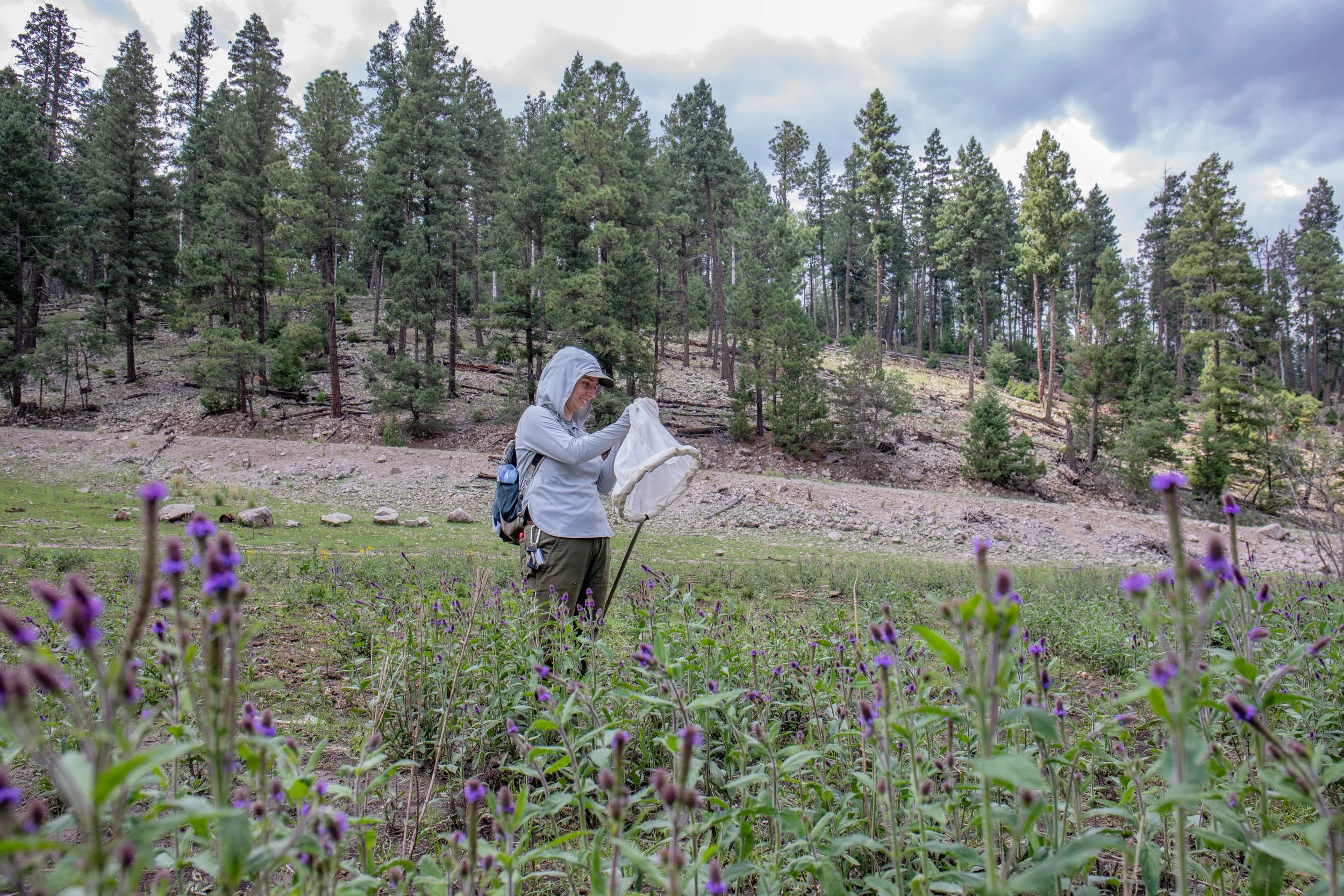
Baine checks her aerial net for a butterfly while surveying at Sleepy Grass on July 9, 2025. Although the Sacramento Mountains Checkerspot Butterfly is known to inhabit Bailey Canyon, Bailey Meadow, and Pines Campground, the team wanted to leave no stone unturned. They monitored not only for the checkerspot butterfly but also other species in the region to assess butterfly populations in Lincoln National Forest.
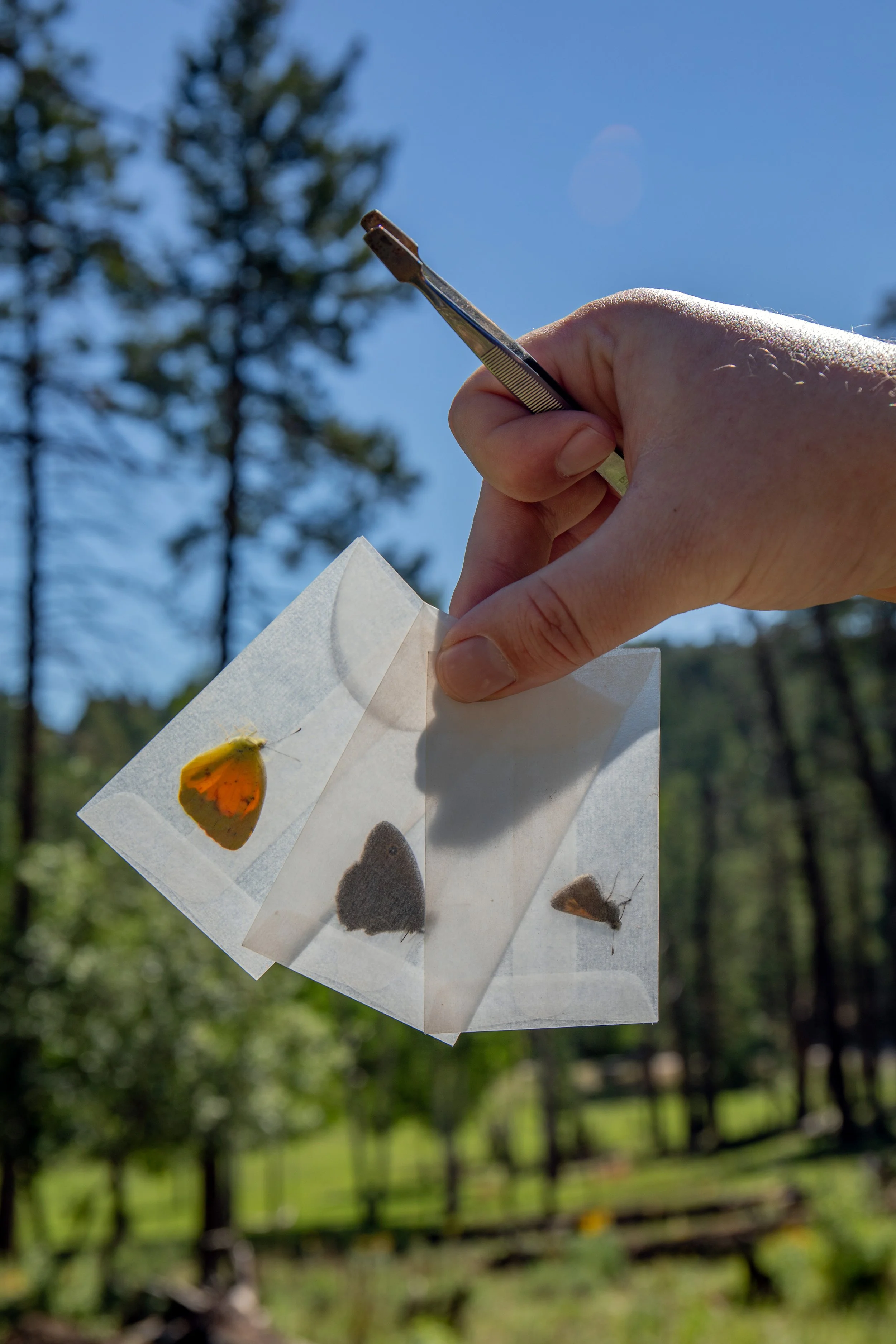
Jahner holds up butterflies he collected for further identification and study in a lab setting at Pines Campground on July 09, 2025.
Volunteers combed through Sleepy Grass Meadow for any sign of the Sacramento Mountains checkerspot butterfly, as the area was dotted with sneezeweed. Although the butterfly is known to dwell only at Bailey Canyon, Bailey Meadow and Pines Campground, the team searched thoroughly, hoping to spot the rare species.
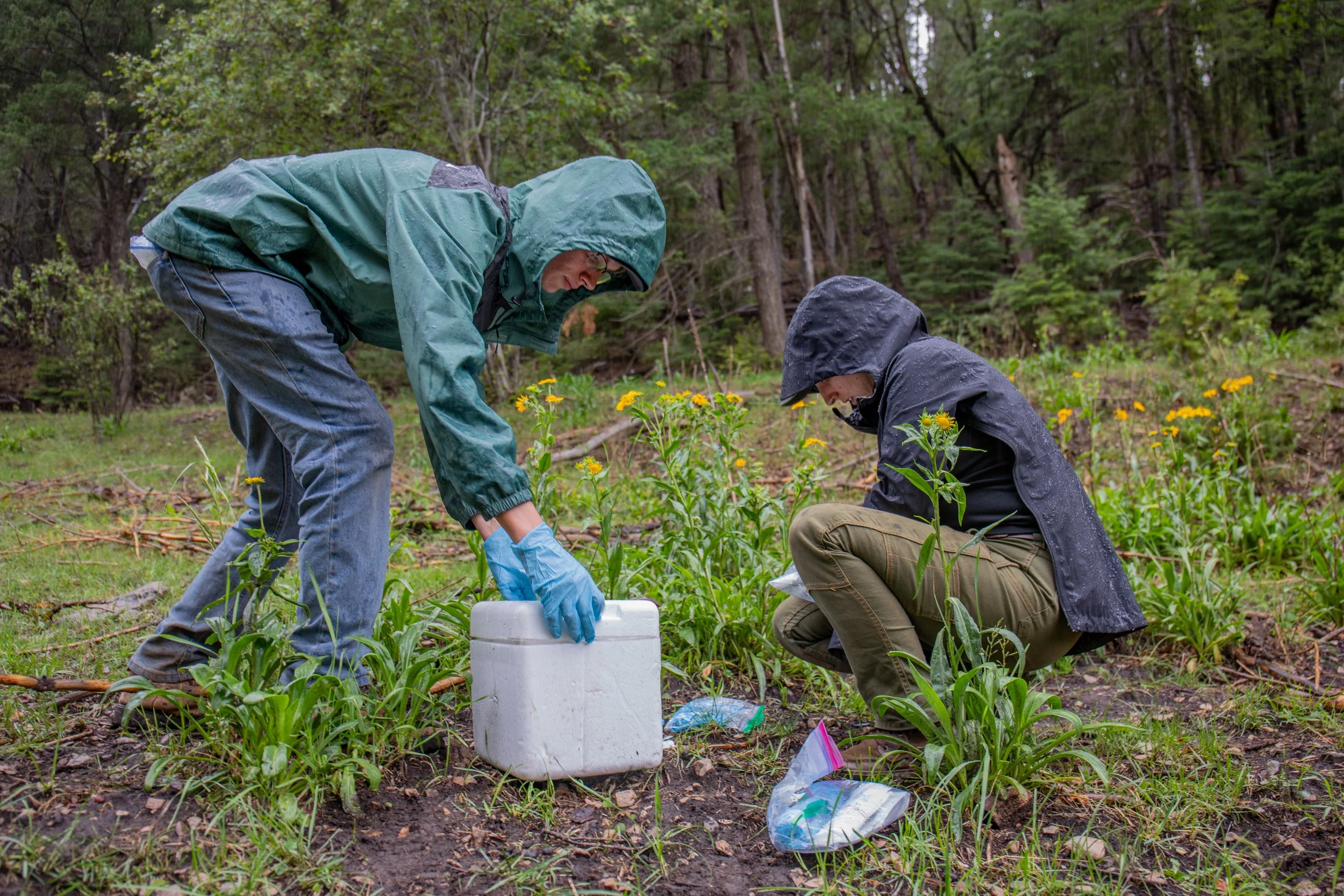
Bulger, left, and Baine, right, prepare to swab sneezeweed flowers for traces of the Sacramento Mountains checkerspot butterfly at Bailey Canyon on July 9, 2025. Sneezeweed is the preferred nectar source for adult butterflies. Researchers believe environmental DNA metabarcoding may help detect traces of butterfly DNA on the flowers they visit. Baine and the team hope the method will aid their search for the checkerspot.
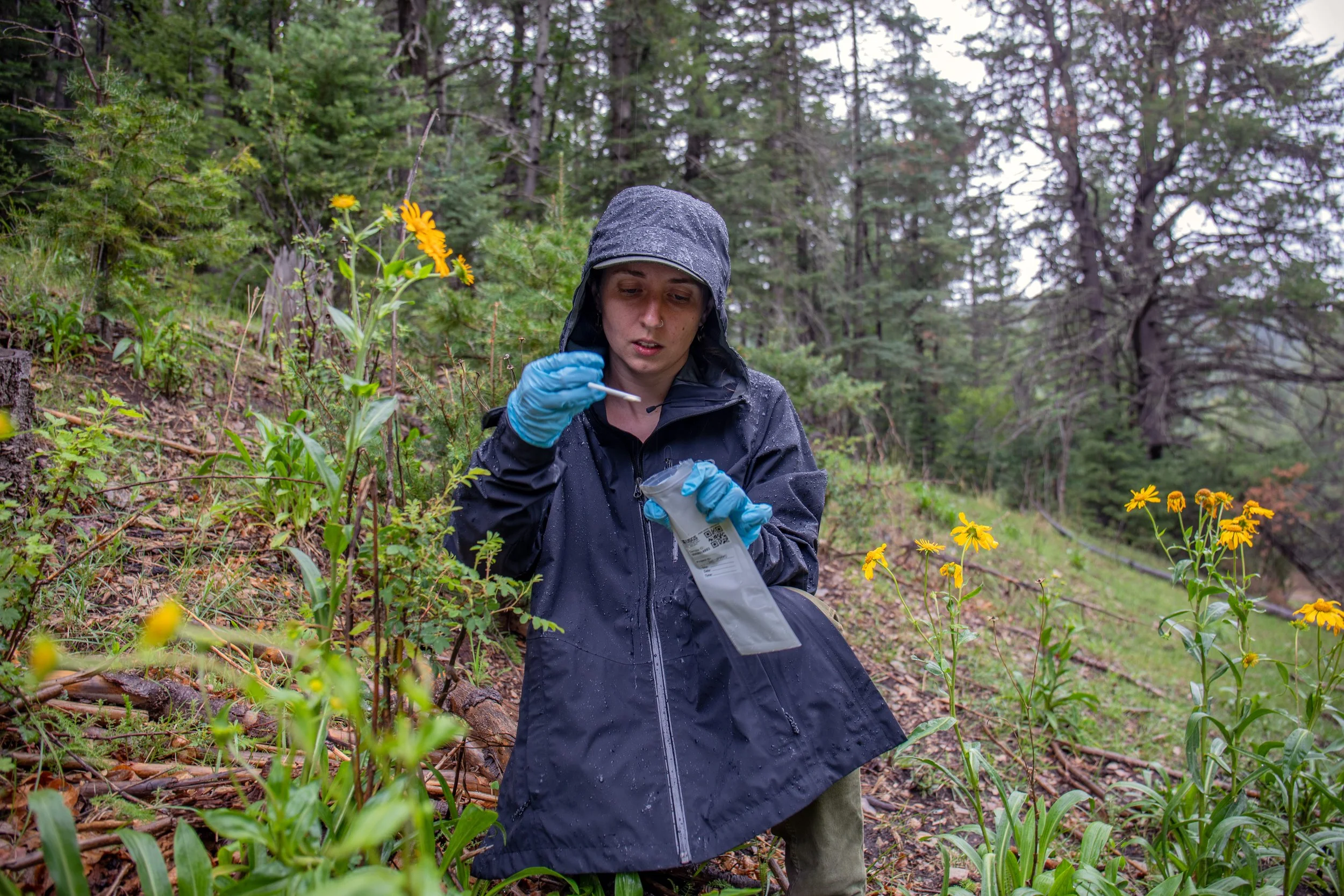
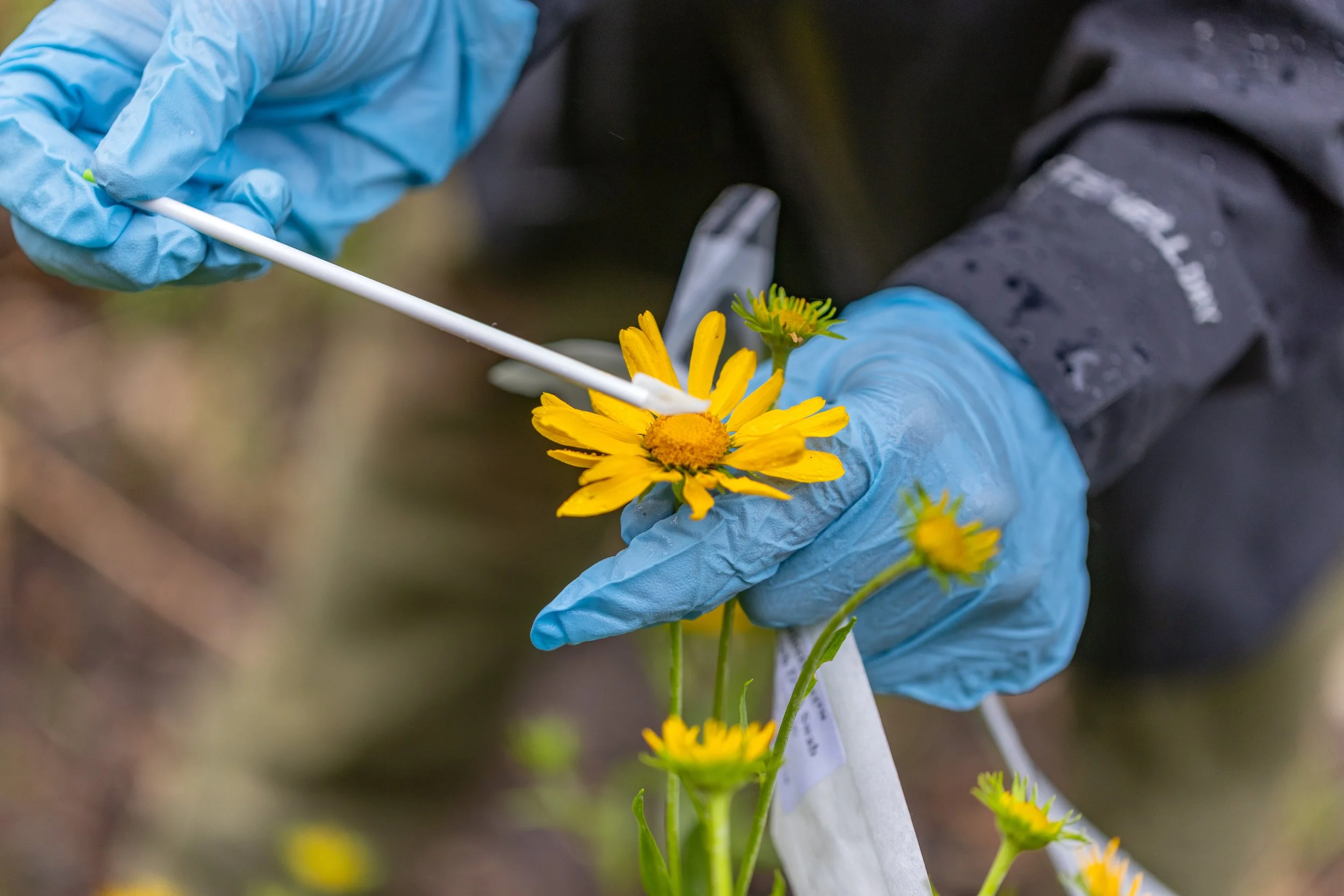
Entomologist Quin Baine, Species Survival Specialist for Invertabrates with the New Mexico Bio Park Society, swabs a sneezeweed flower for environmental DNA (eDNA) metabarcoding during butterfly surveys for the species in the Lincoln National Forest on July 9, 2025. This method is helpful in testing for traces of terrestrial arthropods DNA on flowers they have frequented. Baine and the team hope using this method may help their search for the Sacramento Mountains Checkerspot Butterfly.
Quin Baine, Species Survival Specialist for Invertebrates with the New Mexico BioPark Society, swabs a sneezeweed flower for environmental DNA (eDNA) during butterfly surveys for the species in the Lincoln National Forest on July 9, 2025. This method helps test for traces of terrestrial arthropod DNA on flowers they have frequented. Baine and the team hope that using this method may help their search for the Sacramento Mountains Checkerspot Butterfly.
The only known living individual larva of the Sacramento Mountains Checkerspot Butterfly (Euphydryas Anicia Cloudcrofti), in captive rearing at the ABQ BioPark on July 1, 2025. The larva was born in captivity in 2022. The species is listed as an endangered species as of Jan. 31, 2023, by the U.S. Fish and Wildlife Service, and is known to exist in only three meadows in the village of Cloudcroft in Southern New Mexico.* *(source) https://www.fws.gov/species-publication-action/endangered-and-threatened-wildlife-and-plants-endangered-species-62
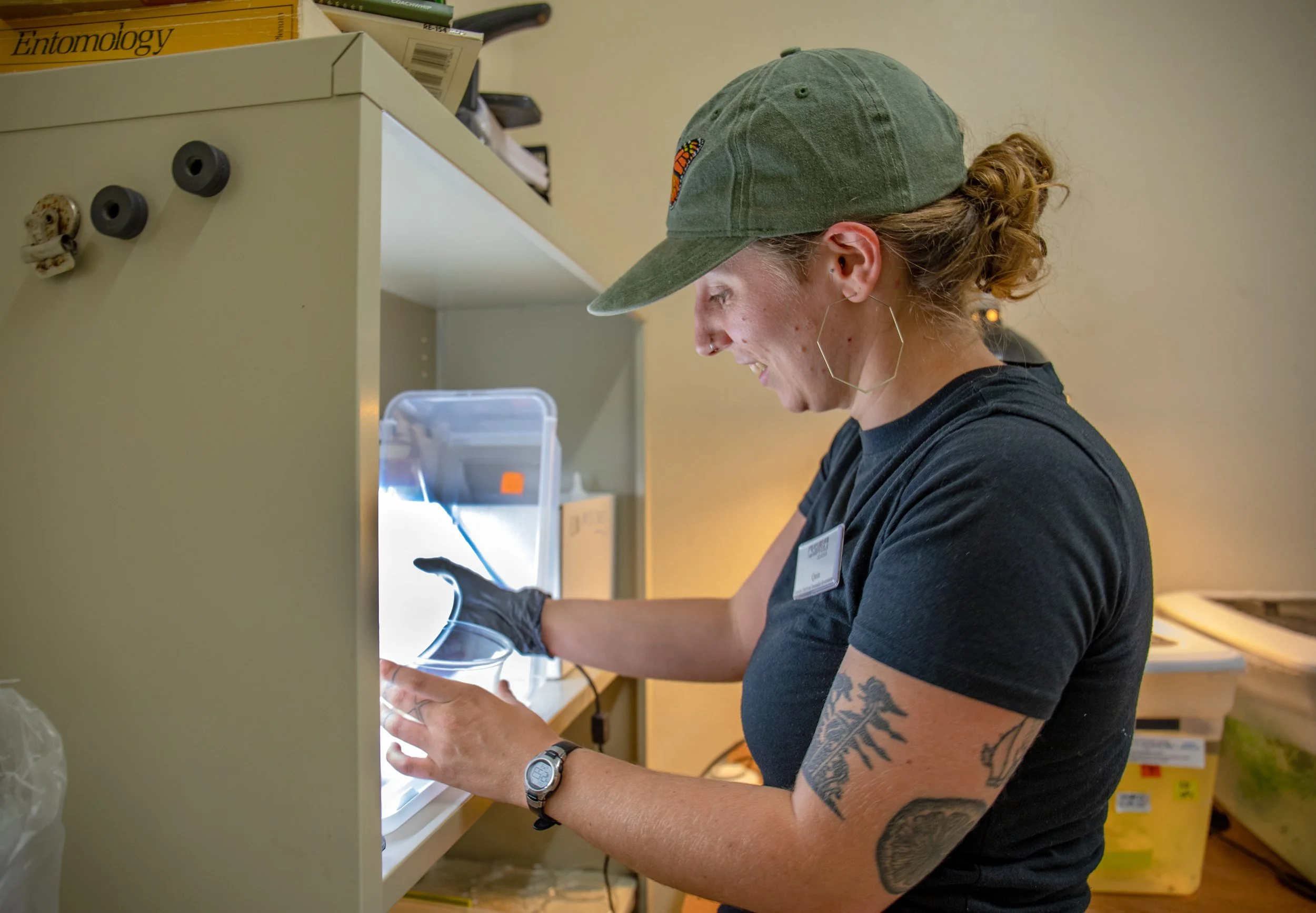
Entamologist Quin Baine, and Species Survival Specialist for Invertebrates with the New Mexico Bio Park Society, carefully checks on the only known living individual of the Sacramento Mountains Checkerspot larva currently in captive rearing at the ABQ BioPark on July 1, 2025.
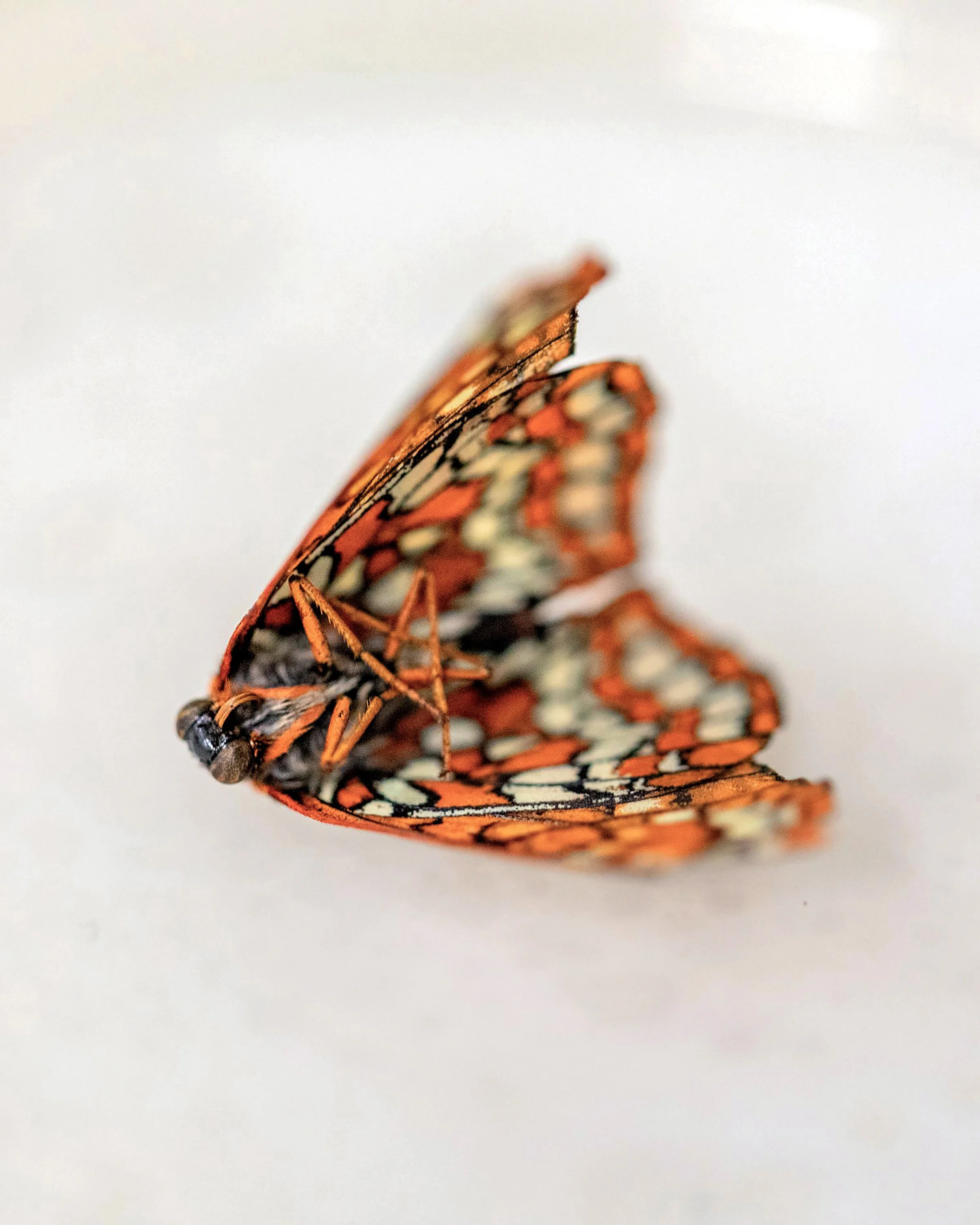
ARCHIVE IMAGE A frozen specimen of a Sacramento Mountains Checkerspot Butterfly is pictured at the ABQ BioPark on Oct. 25, 2023. The butterfly is one of only two larvae successfully reared to adulthood (TC) as part of efforts to repopulate the species. Its sperm was extracted in an attempt to crossbreed and help revive the species. (Editor’s note: TC = to confirm/check.)
Photographer’s Note: For the past three years, I’ve been working alongside a team of dedicated scientists combing the Lincoln National Forest in search of any remaining signs of the critically endangered Sacramento Mountains Checkerspot Butterfly—and in hopes of finding a mate for the last known checkerspot caterpillar (pictured above), currently housed at the Albuquerque BioPark.
Across all three of my field seasons with the team, beginning in 2023, we found no larvae and recorded no sightings of the butterfly within the region’s only three known endemic meadows. Climate change, human decision-making, and the impacts of feral horses have drastically reduced the butterfly’s already fragile habitat.
There is, however, a small measure of hope. Following the federal listing of the checkerspot, protective fencing has been installed around the three meadows, and endemic purple beardtongue (Penstemon neomexicanus)—the caterpillar’s host plant—has begun to reemerge.
For now, the sole known living caterpillar has been placed into diapause, with the hope that it can eventually be crossbred with a subspecies to continue a hybrid lineage of the checkerspot—if it survives the winter, awakens in the spring, and successfully emerges as a butterfly.
It was an honor to collaborate with The New York Times—with deep thanks to Catrin Einhorn for her beautiful reporting, and to Matt McCann for his tireless work bringing this story together. I’m also grateful to the entomologists, forest rangers, and volunteers working to protect this rare and precious species. Its future truly rests in our collective hands.
A special thank you to Ed Kashi, James Estrin, and all of my Anderson Ranch colleagues who began this journey with me in 2023—thank you for your sharp eyes, generous hearts, and constant encouragement. And finally, to the small, nameless caterpillar I’ve grown to love, and who has shared its quiet magic with me all this time: I’m rooting for you.
*This is from a larger photo essay series of my personal project “Silent Flight in the Anthropocene.”